RuneScape - Fantasy MMORPG
- 3.3
- Rating
- 1.00M
- Installs
- Free
- Price
 Analysis by App-foxy
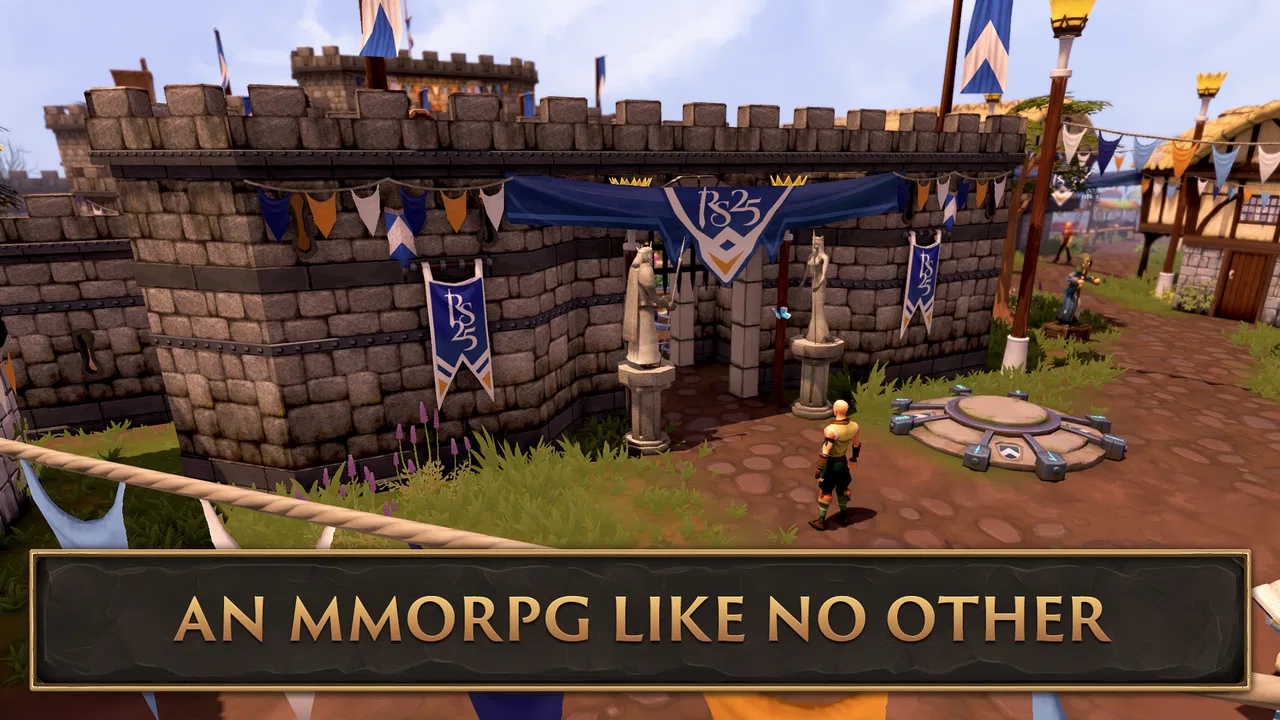
I approached RuneScape as the kind of mobile role-playing game that can become either a long-term hobby or a frustrating first session, depending on how patiently you handle its setup and learning curve. It is a free medieval fantasy MMORPG from Jagex Games Studio, built around an open world where combat, quests, exploration, and skill development all compete for your attention. That freedom is its biggest attraction, but it also means the game does not always tell you what to do next in the clearest possible way.
After spending time with it, my honest impression is that this is not a lightweight game for filling five spare minutes without preparation. It feels closer to bringing a large desktop-style online RPG to a phone or tablet. The mobile version can be convenient, especially when I want to check progress or complete a familiar activity away from a computer, but the interface asks for attention and the world rewards players who are willing to learn its routines.
The game arrived on mobile on June 16, 2021, and its current version is RuneScape_949_4_1_8. It runs on Android 8.0 or later, carries a Teen content rating, and is free to install. Optional purchases range from $0.99 to $131.88 per item, so I would approach the store carefully and decide in advance whether I want to spend anything. The large price range makes it especially important to treat purchases as optional conveniences rather than part of the basic decision to try the game.
You May Also Like

 Blood Strike: 2.5 Anniversary
Blood Strike’s Loadouts Turn Every Drop Into a Tactical Gamble
A close look at Blood Strike’s custom loadouts: how fast access to signature weapons reshapes its battle royale rhythm, rewards preparation, and narrows the gap between fights.

 Pandora - Music & Podcasts
Pandora’s Music Is Easy to Start, but Harder to Recover
Pandora’s strength is its low-effort path from a seed to a station. Its weak spot is how much confidence it asks you to place in connection, setup, and quiet recovery.

 8 Ball Pool
 Is Built on Rivalries, Rematches, and Routine
A close look at the rivalries, rematches, shared routines, and unanswered safety questions that turn a quick pool match into a persistent mobile community.

 Samsung Music
’s Quiet Strength Is Playing What You Already Own
Its reach comes less from spectacle than from dependable access to a personal library. That simplicity is both the app’s strongest retention engine and its ceiling.

 AccuWeather: Weather Radar
AccuWeather Review: A Quick, Clear Forecast for Everyday Decisions
For everyday plans, the best forecast is the one you can understand quickly. AccuWeather makes rain timing, radar, and local conditions easy to act on, with a few trade-offs.

 Hill Climb Racing
Why Hill Climb Racing Still Turns Crashes Into One More Run
A tiny car, a bumpy hill and one more upgrade: Hill Climb Racing keeps resurfacing because its simple chaos makes every near-miss feel personal.
More From Our News Desk



Getting past the first points of friction
The first obstacle is not necessarily combat or quest difficulty. It is understanding what kind of game this is. Many mobile RPGs present a narrow sequence of missions, direct you toward the next reward, and keep the action moving. RuneScape gives you much more room to choose. You can fight, train non-combat skills, follow quests, travel, gather resources, or simply work toward a personal goal. That freedom is excellent once I know what I am doing, but it can feel like a lack of direction during the opening hours.
I found it useful to separate “what can I do?” from “what should I do right now?” The first question has a huge answer. The second should be much smaller. Rather than trying to understand the entire world, I recommend choosing one immediate target, such as learning the rhythm of a combat encounter, completing a quest, or improving one skill. This reduces the feeling that every menu and location is demanding attention at once.
Movement and interaction can also take adjustment on a phone. On a larger screen, an open-world interface has more room for maps, inventory management, chat, and contextual buttons. On mobile, those elements compete for space. I sometimes caught myself tapping near the right object but selecting something else, especially when several characters or items were close together. Slowing down is not wasted time here; rushed taps can create more work than they save.
The most useful early habit is to treat the interface as a tool to learn, not an obstacle to defeat. I would spend a few quiet minutes checking where the inventory, map, quest information, combat controls, and skill information are located. That small investment makes later sessions feel much less chaotic. It also helps distinguish a genuine game problem from a simple case of looking in the wrong panel.
Why the game can feel demanding on a phone
RuneScape is unusually broad for a mobile role-playing game. The phone version is not just a short, simplified adventure with a handful of levels. It asks me to manage movement, equipment, resources, objectives, and long-term progression while also reading the world around me. That depth is a strength for players who enjoy planning, but it is a poor match for anyone expecting a mostly automatic experience.
My first practical recommendation is to avoid playing it in situations where I cannot give the screen steady attention. A crowded commute, a short queue, or a distracted break may be fine for a familiar routine, but not for learning a quest or navigating a new area. Losing track of an objective is more likely when I am interrupted, and the game rarely feels satisfying when I am only half watching it.
Another source of friction is the difference between a short session and a meaningful session. Some activities can fit naturally into a brief visit, while quests, travel, and unfamiliar battles may require more concentration. I prefer to decide before opening the game whether I am checking progress, practicing a known activity, or starting something new. That simple choice prevents me from beginning a complicated task when I only have a few minutes.
Checks worth making before blaming the game
When the game does not behave as expected, I start with basic checks rather than immediately assuming the account or installation is broken. I confirm that the device meets the Android 8.0 minimum, make sure the game has finished updating, and restart it if a screen appears stuck. I also check whether the device has enough free space for normal updates and whether the connection is stable enough for an online world.
These checks sound ordinary, but they matter more in an MMORPG than in an offline puzzle game. A weak connection can look like delayed input, a missing response, or a character that seems unwilling to move. A crowded device can make loading and switching between screens feel worse. Restarting the app after an update is also a sensible step before trying more complicated fixes.
I would not begin by repeatedly reinstalling the game. That can take time and may not solve a temporary connection or service issue. First, I close other demanding apps, reconnect to a reliable network, restart the device if necessary, and try the same action again. If the problem appears only in one location or during one activity, I note that pattern instead of treating every part of the game as faulty.
Controls deserve their own check. If taps are consistently landing in the wrong place, I look for a different interface arrangement or adjust how I hold the device before deciding that the game is unplayable. A larger screen can make inventory and navigation easier, while a smaller phone may be more convenient for carrying but less comfortable for detailed interaction. That is a hardware trade-off, not automatically a flaw in the game.
A recovery routine for interrupted sessions
One realistic everyday situation is playing during a lunch break. I might log in intending to finish a familiar task, get interrupted by a message or conversation, and return several minutes later unsure what I was doing. My recovery routine is simple: check the character’s location, inspect the current objective, confirm health and equipment, and only then resume. Those steps are safer than immediately tapping through the screen and hoping the previous plan comes back to me.
If I lose track of a quest, I avoid wandering randomly. I reread the objective, check the map, and identify the last action I clearly remember completing. When that still does not help, I move to a familiar safe area and reorganize my inventory before trying again. This turns confusion into a reset point. It is especially useful on mobile, where a small display makes it easier to miss a line of instructions or a nearby interaction.
For combat, I use the same principle. After an interruption, I check whether the character is still in danger, whether the intended target is selected, and whether the available abilities or equipment match the situation. I do not assume that a failed action means the game has ignored me. Sometimes the character is out of position, the target has changed, or I have returned to a screen that is not showing the control I expected.
Inventory management is another practical recovery tool. When a session starts to feel messy, I stop collecting more items and sort out what I am carrying. Keeping the items needed for the immediate objective easy to find reduces accidental selling, unnecessary travel, and repeated menu searches. This is not glamorous advice, but it saves more time than trying to memorize every system at once.
Separating game problems from device problems
It is tempting to blame RuneScape whenever loading takes longer than expected or an input feels delayed. In practice, the cause may be the phone, the network, or the way the session is being played. If other online apps are also slow, I investigate the connection first. If only this game struggles while the device is hot or nearly full, I look at the phone’s condition before changing anything inside the game.
Battery and heat can alter the experience as well. A large online world can be more demanding than a simple turn-based game, particularly when I keep the screen bright and play for a long time. If the device becomes uncomfortable to hold, I take a break rather than pushing through. The result is better for both the session and the hardware, and it prevents me from mistaking thermal slowdown for a permanent performance problem.
Touchscreen limitations are real. Precise interaction is naturally easier with more screen space, and some players will find a tablet more comfortable than a small phone. I would choose the device based on the activities I expect to do most often. A phone works well for checking familiar routines and making progress in manageable steps; a larger display is preferable when I am navigating, reading objectives, or managing many items.
There is also a social factor. An MMORPG can feel quiet or confusing if I approach it like a private single-player game and ignore the surrounding community systems. At the same time, I do not need to become deeply social immediately. I can learn the basics alone, then decide whether interaction with other players improves the experience. Players who strongly prefer a self-contained offline adventure may find the online structure less comfortable than a conventional single-player RPG.
How it compares with more guided mobile RPGs
Compared with the usual mobile role-playing alternatives, RuneScape gives me more ownership of the pace and direction. A heavily guided RPG is easier to start because the next objective is usually obvious, the menus are narrower, and progress is arranged around a clear campaign. That style is better when I want a polished, directed story during short sessions.
RuneScape is stronger when I want a persistent world in which my goals can change from day to day. I can focus on combat one evening and pursue a non-combat skill another time without feeling that I have abandoned the main game. The trade-off is that I must provide more of my own structure. There is less of the instant certainty that comes from following a linear mission chain.
It also differs from action-first mobile RPGs. Those games may make every encounter feel fast and visually immediate, while RuneScape places more emphasis on preparation, progression, and choosing how to spend time. I would not recommend it to someone whose priority is constant spectacle or rapid battles. I would recommend it to someone who enjoys watching a character develop through repeated decisions and long-term routines.
The free entry point makes trying it easy, but the optional purchase range means I would be cautious about spending before understanding the core loop. I would play long enough to decide whether the world, progression style, and mobile controls suit me. If I already know I dislike games with extended development, open-ended objectives, or optional spending, this is probably not the right role-playing game to force myself to enjoy.
Who will get the most from the experience
This is a good fit for players who enjoy setting personal goals. I like games where progress can mean improving a skill, finishing a quest, becoming more capable in combat, or simply learning a better route through the world. RuneScape supports that kind of self-directed play better than a game that measures success only by completing the next chapter.
It is also appealing for someone who wants one persistent hobby rather than a series of short mobile campaigns. The breadth gives me reasons to return even when I am not in the mood for the same activity. That flexibility is valuable, but it comes with a responsibility to manage my own time. Without a small plan, I can spend a session opening menus and changing goals without feeling that I accomplished anything.
I would be more hesitant to recommend it to a newcomer who wants immediate clarity, a tightly scripted story, or a game that can be understood in one sitting. The Teen rating also makes it more suitable for a teen and adult audience than for younger children. Anyone considering optional purchases should involve the appropriate account and device safeguards rather than treating the free installation as the whole financial picture.
What the store numbers suggest, and what they do not
The game has passed one million installs, which tells me it has reached a substantial mobile audience, though popularity alone does not guarantee that its interface will suit every phone. Its average rating is 3.3 from roughly seventeen thousand ratings, alongside about two thousand six hundred written reviews. I read that combination as a sign of a divided experience: some players value the depth and continuity, while others are likely frustrated by controls, complexity, or mobile limitations.
Those figures make sense alongside my own impression. This is an ambitious conversion of a broad MMORPG into a touch-first format, not a game designed solely around quick phone sessions. The same systems that make it interesting can make it demanding. I would not use the rating as a reason to dismiss it, but I would use it as a reminder to test the controls and opening flow before investing money or planning it as my main mobile game.
My practical verdict
After reviewing the setup friction, recovery habits, and device trade-offs, I see RuneScape as a rewarding but deliberate mobile RPG. Its best quality is the freedom to decide what progress means to me. Its biggest weakness is that the freedom can feel like confusion, especially on a small screen or during a rushed session.
I recommend starting with a stable connection, a device that meets the Android requirement, and one modest goal rather than trying to explore everything immediately. Learn the interface during a calm session, keep inventory decisions tidy, and use a short recovery checklist whenever an interruption breaks your concentration. Those habits make the game feel far more approachable without pretending that its depth can be reduced to a few taps.
Jagex Games Studio has made a free mobile entry point for a classic-style fantasy MMORPG, but the word “free” should not be mistaken for “frictionless.” The optional purchases deserve restraint, and the mobile version demands more patience than a guided RPG. Still, if you want a persistent medieval world where combat, quests, and skill development can support different kinds of play, I think it is worth trying. For me, the deciding question is not whether it looks simple on a phone, but whether you enjoy building your own routine inside a very large game.
I would choose a more linear mobile RPG for a quick, story-led experience, and an offline role-playing game for uninterrupted play without online dependencies. I would choose this one when I want a long-running world to return to, with enough freedom that my next session does not have to resemble the previous one. That makes it a specialized recommendation rather than a universal one, but for the right player, the extra learning and setup are part of what gives the adventure its staying power.
FAQs for RuneScape - Fantasy MMORPG
01What is RuneScape - Fantasy MMORPG?
RuneScape - Fantasy MMORPG is a large online role-playing game set in the fantasy world of Gielinor. You create a customizable character, explore cities, wilderness areas, dungeons, and other regions, complete quests, fight monsters, gather resources, craft equipment, and interact with other players. Unlike many traditional MMORPGs, it offers a flexible progression system, allowing you to develop skills and follow activities at your own pace.
02Is RuneScape free to play on Android and iOS?
RuneScape can be downloaded and played for free on compatible Android and iOS devices, but the free version provides access to only part of the overall game world and content. A membership subscription unlocks additional quests, regions, skills, items, and activities. Before subscribing, it is worth trying the free experience first, since progression can require time and the game contains a considerable amount of content designed for long-term players.
03Does RuneScape require an internet connection?
Yes, RuneScape is an online MMORPG and requires a stable internet connection to play. The game communicates continuously with its servers to manage your character, quests, inventory, combat, and interaction with other players. It is therefore not suitable for offline gaming, and performance may suffer when using weak mobile data or unreliable Wi-Fi. A stable connection is especially important during combat or activities involving other players.
04Can I use the same RuneScape account on mobile and PC?
RuneScape supports cross-platform progression, so you can generally access the same character on mobile and desktop by signing in with the same account credentials. This makes it convenient to continue playing while traveling or away from your computer. However, you should carefully choose the correct login method and account, because creating or linking a different account may result in separate progress rather than combining your existing character.
05Is RuneScape suitable for new players?
RuneScape is suitable for beginners, although its enormous world and many skills can feel overwhelming at first. The game provides tutorials, introductory tasks, guided quests, and numerous activities to help you learn the basic systems. Progression is largely open-ended, so there is no single required route. New players should take their time, read quest instructions, manage their inventory carefully, and remember that some advanced content is intended for experienced or subscribed players.
Pros
- Deep
- evolving world with years of quests and lore to explore.
- Flexible skill system lets you shape your character without fixed classes.
- Large player community supports trading
- clans
- and social activities.
- Frequent updates add fresh content
- events
- and gameplay improvements.
- Cross-platform progress makes switching between mobile and desktop convenient.
Cons
- Many advanced features and areas require an optional membership subscription.
- The interface can feel crowded and difficult to learn on smaller screens.
- Progression often involves repetitive training and lengthy resource gathering.
- Some activities are less comfortable to control with touch inputs.
- The huge amount of content may overwhelm players seeking quick sessions.

RuneScape - Fantasy MMORPG
Gallery